“CHINESE CAR WASH” OR THE NASCENT EMPIRE OF CORRUPTION | Sol de Pando gains access to investigations in Brazil, France and England that scrutinize Chinese mafioso Sam Pa’s control over public works projects in South American countries. They address a unique extractivist model whose influence began in African countries where companies such as Sinohydro and CAMC financed the regimes of African Stalinist autocrats…
SINOHYDRO LINKED TO MAFIA THAT PAID FOR LAMIA AIRLINES’ PLANES
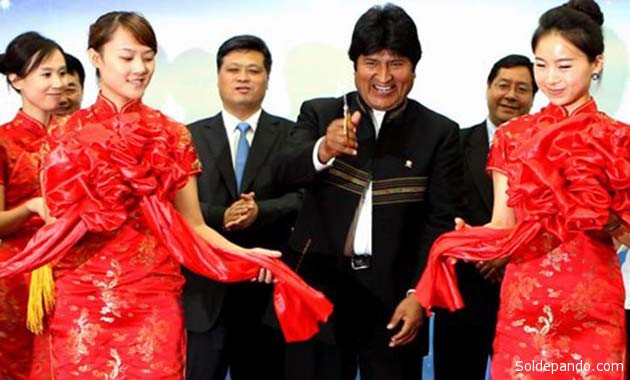
August 2011. President Morales in Beijing during the launch ceremony of the Tupac Katari satellite, manufactured in China for Bolivia. | Photo Xinhua

DISPONIBLE EN PDF
BAJAR
© Wilson García Mérida | Newsroom Sol de Pando in Brasilia
© Translation by Scott Campbell
© Original in spanish
Who would have thought that Bolivia’s main calamity in the 21st century, the prevalence of endemic corruption steamrolling the Plurinational State, took shape in Africa after crossing over from China…
“My last partner was Mr. Shen Wei”, Gabriela Zapata told the court investigating her early enrichment in May 2017. “I didn’t know it was a crime to receive gifts from some of the partners I’ve had”, she said in justifying her income that exceeded $20,000 USD monthly from multiple sources.

Gabriela Zapata, the lover shared between president Evo Morales and his minister Juan Ramón Quintana. | Photo archive of Sol de Pando
The strange thing is that in 2010, even before meeting Wei or having a degree, Zapata acted as a representative in Bolivia for another Chinese company, CITIC, that was trying to take control over lithium mining in the Salar de Uyuni. In a confession she later retracted, Zapata identified Juan Ramón Quintana, at the time the Minister of the Presidency, as serving as her connection with the Chinese.
CAMC is one part of a conglomerate of Chinese construction firms, such as Sinohydro, Gezoiba, Sinopec, etc., that operate through offshore holdings created by magnate Sam Pa in the tax haven of Hong Kong.
Shen Wei and his family became partners with Sam Pa in several mega-businesses based in Central Africa. Before arriving in Bolivia, Shen Wei oversaw CAMC contracts in Angola, Cameroon and Zimbabwe. His father, Wang Wei —an important figure in the Chinese Communist Party— was Chargé d’affaires at the Chinese Embassy in Luanda, working closely with Sam Pa to turn Angola’s state oil company (Sonangol) into a joint Chinese-African venture under the control of the family of Angolan autocrat José Eduardo dos Santos. His daughter, Isabel, is president-for-life of the Portuguese-African corporation and supported by her father’s Chinese business partners.
GALLERY | The Sam Pa's tentacles
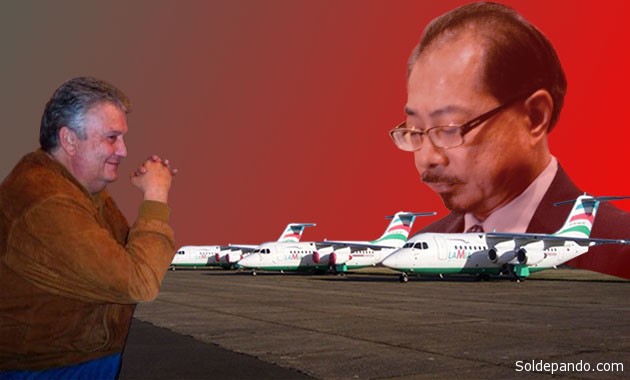
The venezuelan scammer Ricardo Albacete arrived in Bolivia trying to reactivate his bankrupt airline after Sam Pa's imprisonment. He pressed to get an international flight license illegally, operating with full fuel. | Photomontage Sol de Pando
What is CAMC?
Dos Santos, the autocrat who ruled from 1979 to 2017, was re-elected several times and during recent decades had Chinese funding for his campaigns. When he fell ill, he promoted Defense Minister João Lourenço as his successor, also a close friend of Sam Pa.
In 2012, Sam Pa, as official representative of China Sonangol, began negotiations to buy the shipyards of the nearly bankrupt Spanish shipbuilder Rodman. He obtained 60% of the shares of Galicia-based oil-tanker factory, valued at close to one hundred million euros. Through the purchase of the Galician shipyard, Sam Pa’s objective was to expand by sea the marketability of African oil in Europe.
Ricardo Albacete, from Venezuela, was Sam Pa’s emissary and front man during the negotiations with Rodman shipyards in the Galician city of Vigo. Along with taking part in the purchase of the shipbuilder, he was responsible for managing Sam Pa’s investments in the aviation sector. During that time, Albacete received funds from Sam Pa to buy three airplanes with which Albacete created Lamia, a domestic airline based in Mérida, Venezuela.
According to an article published by the online outlet El Confidencial on November 30, 2016, the prestige that Sam Pa earned in Galicia thanks to his rescue of the Rodman shipyards, “placed Albacete in a privileged position, as word spread among Galician business people that Sam Pa had the intention of making more investments in Galicia and, therefore, everyone wanted to meet with his delegate in Spain. All this year and last, the Venezuelan spent months interviewing Galician entrepreneurs seeking capital for their businesses and political leaders. Regarding the latter, he even closed meetings to put them in contact with the Chinese magnate”.
At the end of 2014, negotiations to buy Rodman shipyards failed and Lamia was broke, unable to even buy fuel for its small fleet of Avro planes. The Chinese magnate had disappeared from the scene. Under a travel ban, he was being tried in Beijing by the Chinese Communist Party. In 2015, he was sentenced to prison for several acts of corporate corruption. The U.S. State Department demanded the Chinese government take him out of circulation because he had illegally made million-dollar diamond mining deals with the bloody dictatorship of Robert Mugabe in Zimbabwe. He was also being investigated by the DEA for money laundering.
Deprived of the money that Sam Pa provided him, Ricardo Albacete went into panic and bankruptcy. As La Voz de Galicia revealed, Sam Pa had offered to buy back Lamia’s airplanes —acquired in 2011 with his own money— to set up a new airline in Sierra Leone. While waiting for Bolivian approval for international flights in 2015, Albacete had his only operable plane parked in a hangar in Vigo’s Peinador airport, waiting for the Chinese godfather to arrive to close the deal with Rodman. But Albacete would never see Sam Pa again.
“The owner of Lamia prepared the Avro CP-2933 for transfer to Sam Pa, who was planning Sierra Leone’s first airline”, reported the Spanish newspaper that interviewed Albacete hours after the Chapecoense tragedy. “It was a verbal agreement, between friends, and we agreed that he would buy my four planes”, the devastated Venezuelan admitted to La Voz de Galicia.
Isolated from Chinese funding and discredited in Venezuela where he faces trial for fraud, Albacete took his planes to a military air base in Cochabamba, with the support of the then-Minister of the Presidency, who put him in contact with officers in the Bolivian Air Force (FAB). In this way, the Venezuelan found in Bolivia an opportunity to save Lamia by entering into shady agreements with the country’s most influential minister and Bolivian drug traffickers for future joint “operations”. As is known, Albacete “pressured” key authorities in Evo Morales’ government to grant Lamia a permit for international flights that forced the planes —designed only for short, domestic flights— to operate with a suicidal limit of fuel. On November 28, the trigger was pulled on this game of flying Russian roulette with a Brazilian soccer team aboard the Avro CP-2933 on the Santa Cruz – Medellín route.
Without fuel, the plane fell a few kilometers from the Colombian airport, killing 66 Brazilian passengers, almost all players from the Chapecoense soccer club, as well as its crew of four Bolivians and one Paraguayan. The tragedy, caused by the habitual lack of fuel in the plane’s overburdened tanks, had its origin —along with the fraudulent permit to fly out of Bolivian territory without meeting the technical and legal requirements— in the imprisonment of Sam Pa, Albacete’s financier, who left his loyal front man in total bankruptcy.
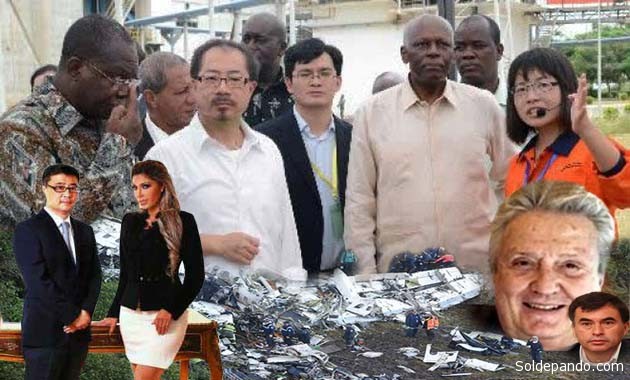
Sam Pa founded the empire of chinese construction companies in Africa, thanks to his relations with the angolan autocrat José Eduardo Dos Santos who privatized the state oil company Sinangol with chinese capital. Sam Pa is also a partner of Shen Wei, lover of the bolivian woman Gabriela Zapata, and financed the three planes of Lamia, an airline created by his venezuelan figurehead Ricardo Albacete. | Photomontage of Sol de Pando
Sam Pa and Sinohydro: The African “Car Wash”
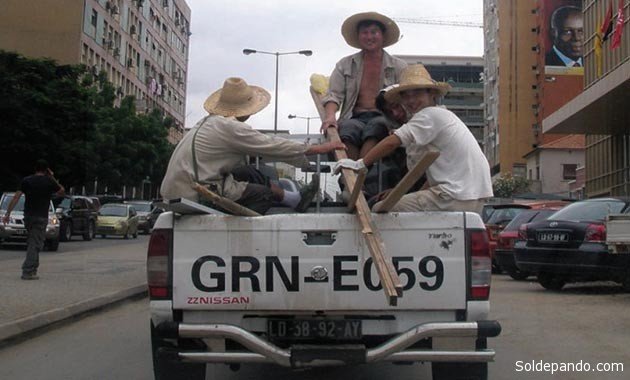
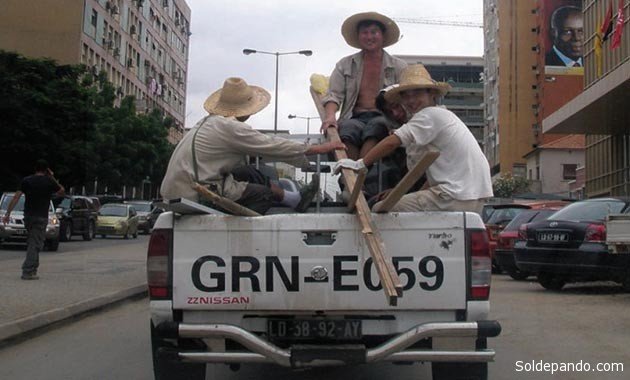
Chinese workers in the streets of Luanda, 2011. In the background, the everlasting image of the stalinist autocrat of Angola José Eduardo dos Santos | Photo courtesy of Louise de Redvers for Sol de Pando
The presidential elections held in Gabon on the last Sunday of August 2016 —a former French colony where tribal power relations predominate— resulted in a scandal surprisingly similar to the Car Wash («Lava Jato» in portuguese) operation in Brazil. Except that the company systematically bribing corrupt candidates with million dollar “tips” was not called Odebrecht, but rather Sinohydro.
That case, dubbed “Sinohydro-gate” by the French media, is cited in a dossier prepared by Brazilian academic researchers in collaboration with the Brazilian Federal Police. That dossier, to which Sol de Pando had access as a contributor to the investigative group, looks at parallels between the strategies developed by Brazilian and Chinese companies to corrupt political systems with sophisticated methods of bribery using corporate expansion into the lucrative public works projects on a continental level.
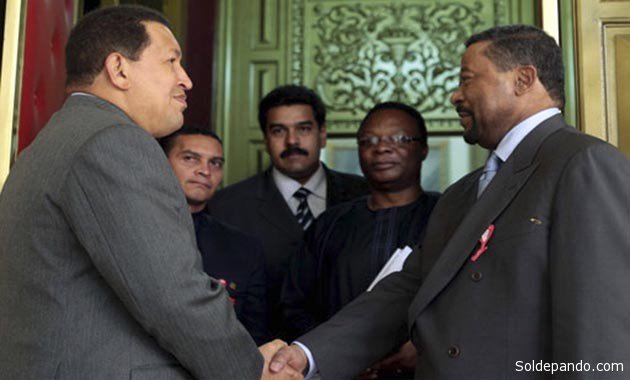
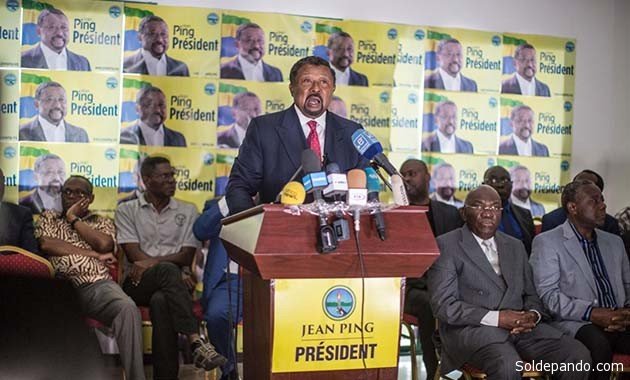
During the last elections in Gabon, Jean Ping, the former Chancellor and son-in-law of the late autocrat Omar Bongo, was the favored presidential candidate to replace his brother-in-law, President Ali Bongo (heir to the Bongo dynasty). However, Bongo ended up being re-elected thanks to a scandal that embroiled his own relatives. Despite his charisma and prestige as the “anti-establishment leftist” inside the dynastic family, Jean Ping lost the elections to his brother-in-law following revelations that he had received bribes from the Chinese construction company Sinohydro.
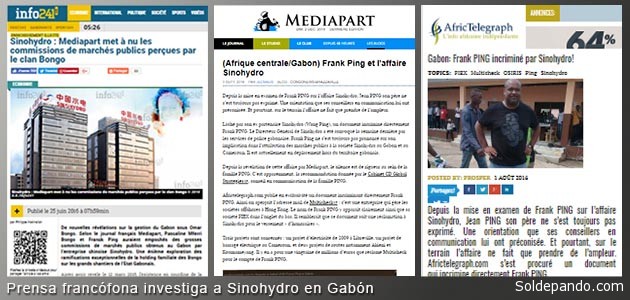
According to an investigation published on June 23, 2016, by the French newspaper Mediapart, Jean Ping’s wife, Pascaline Bongo (sister and former chief of staff for now re-elected President Ali Bongo, also famous for being Bob Marley’s girlfriend one year before the Jamaican singer’s death in 1981) and their son, Frank Ping, had received juicy “commissions” from Sinohydro since 2008. These were in exchange for important contracts for the construction of a giant hydroelectric power plant on the Ogooué River as well as four major highways: Leyou-Lastourville, Akieni-Okondja, Koumameyong-Ovan and Mikouyi-Leroy Crossing. These works were financed by Chinese credit from Eximbank (the Export-Import Bank of China). Crooked deals led to similar projects in Cameroon.
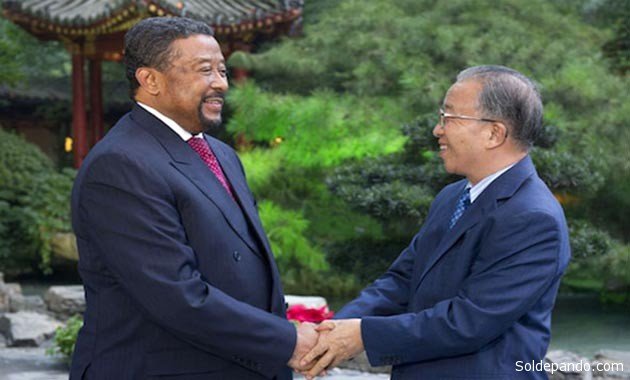
Jean Ping primarily received bribes from Sinohydro between 2008 and 2012, when he held the presidency of the African Union Commission, based in Ethiopia. From there, he exercised influence over all the organization’s member states, promoting works contracts in favor of the Chinese construction company. Under Ping’s presidency, the Chinese government and Sinohydro donated funds to construct a modern building to serve as the African Union’s headquarters.
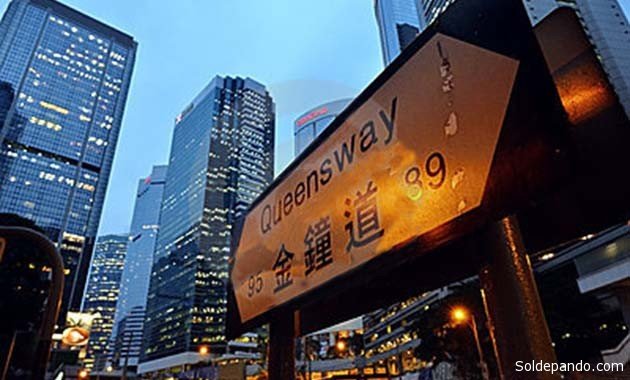
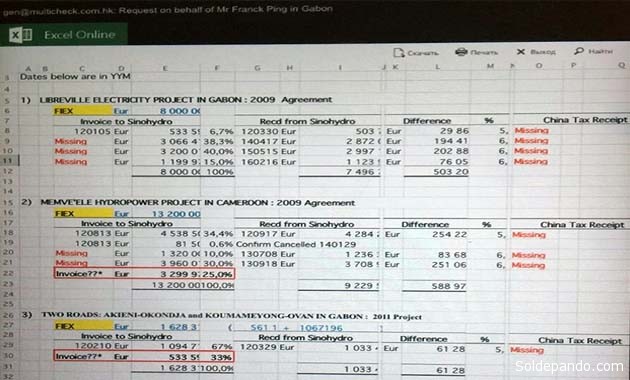
Pascaline Bongo and her son Frank Ping created at least three offshore companies that operated in a building on Queensway Avenue in Hong Kong owned by Chinese magnate Sam Pa (in charge of directing lines of credit from Eximbank to Africa). These were Ping Ping and Consulting Limited, the FIEX society, and the consultancy Osiris, to whose accounts Sinohydro paid bribes to the Ping family in the form of consulting “honorariums” and other non-existent services.
After the revelations in Mediapart’s report, Sinohydro executives together with Jean Ping, his ex-wife, and son are being officially investigated by Gabon’s Attorney General. Libreville prosecutor Steeve Essame Ndong mentioned a Sinohydro executive who, as part of a cooperation deal with prosecutors, admitted to and provided documentation of bribes paid to Frank Ping in a manner similar to the Brazilian Car Wash. Prosecutor Essame Ndong also summoned Jean Ping’s son, but the accused fled and is currently wanted by Interpol.
After being re-elected for a second time, Ali Bongo’s first diplomatic act was to visit the Chinese President Xi Jinping in Beijing on December 7, 2016, one year after the arrest of Sam Pa. The autocrat fell ill last October and, while convalescing, his brother-in-law Jean Ping laid claim to succeed him. Sinohydro clapped its hands.
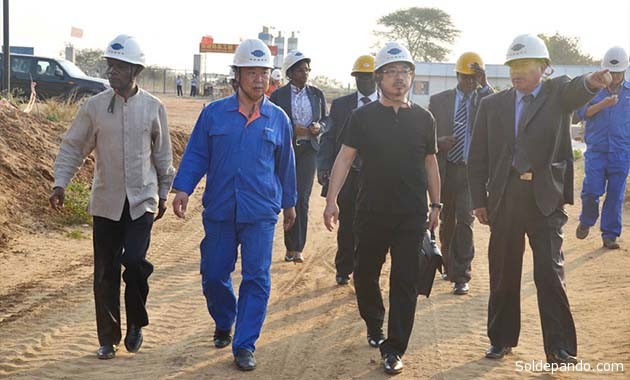
GALERY | Contact in Angola
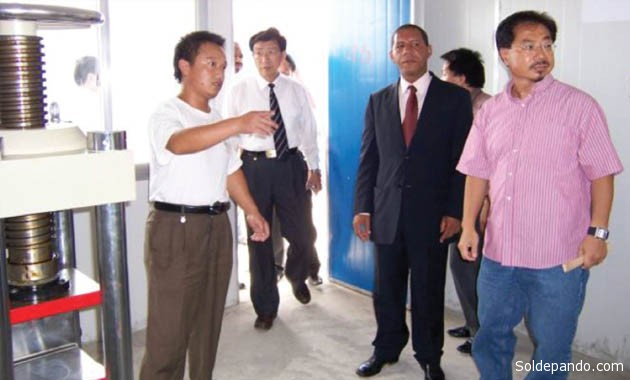
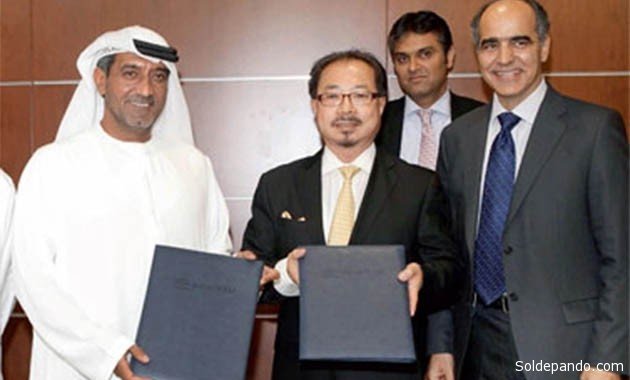
In this image for which specific information is not available, Sam Pa is shown exhibiting contracts also signed with Arab businessmen. | Photo Courtesy of JR Mailey for Sol de Pando